KPRH High Pressure Regulator
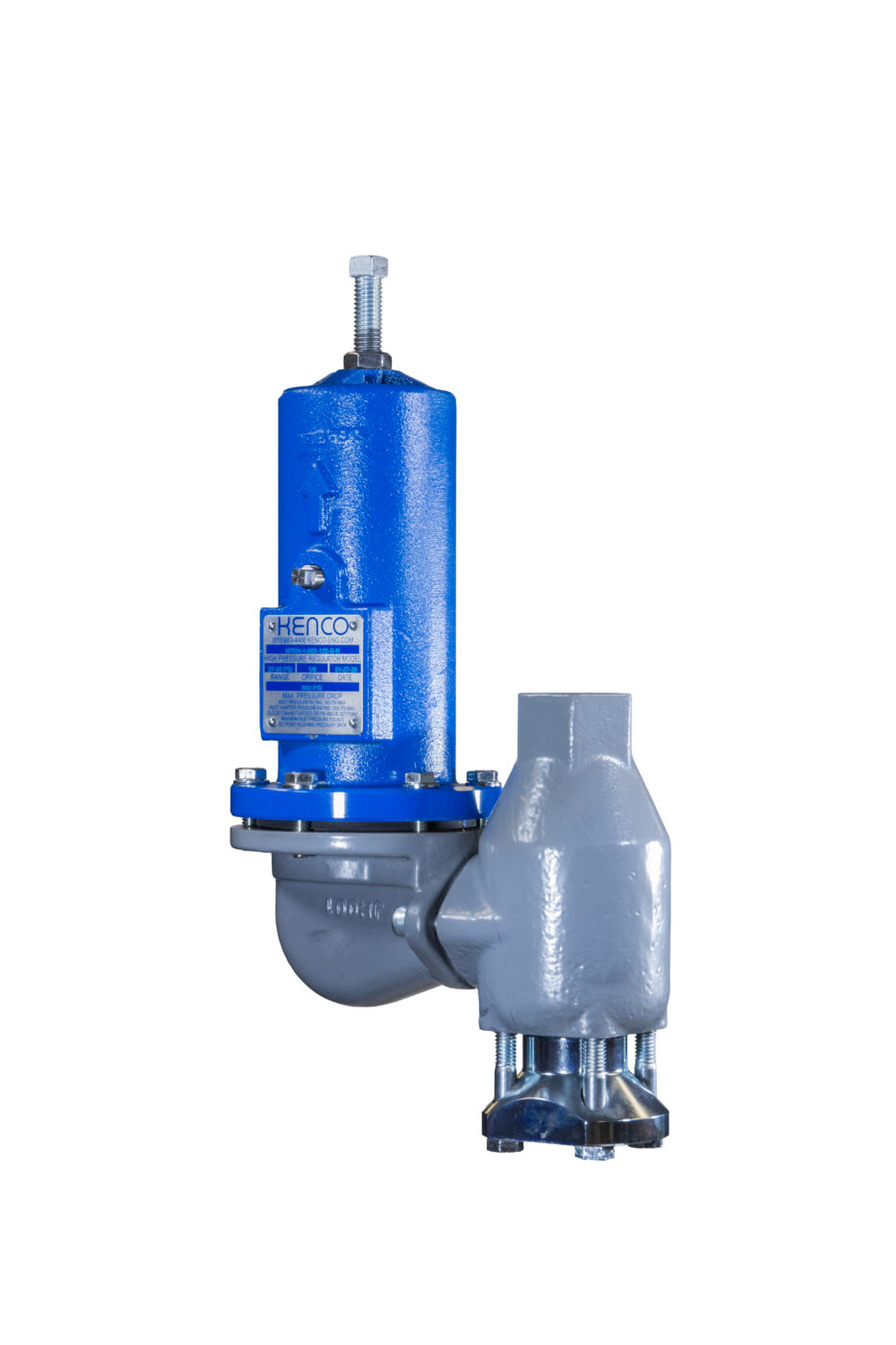
KPRH High Pressure Regulator
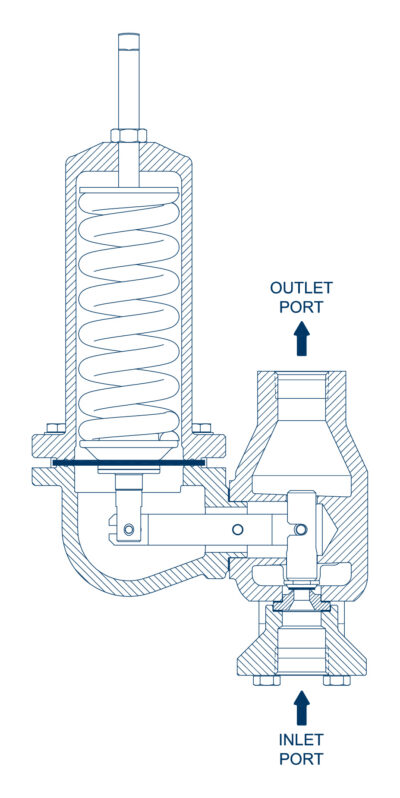
The model KPRH is a direct-acting pressure reducing regulator for use with natural gas, air, and a variety of other gases. The regulator outlet pressure is controlled by a diaphragm and an adjustable spring that opens or closes the valve as the downstream flow demand changes. A decrease in flow demand will cause the downstream pressure to increase and consequently, the diaphragm will compress the spring. The positive movement of the diaphragm will move the seal closer to the orifice, thus restricting the flow and causing the downstream pressure to decrease. An increase in flow demand will cause the downstream pressure to decrease and the spring force will push the diaphragm and move the seal further away from the orifice. Moving the seal further from the orifice will result in an increase in flow and pressure. There are 5 orifice sizes and 6 springs available to cover a wide range of application conditions. With the correct orifice and spring combination, the KENCO model KPRH High Pressure Regulator will maintain a constant pressure downstream while meeting the flow demand.
FEATURES
• 1” NPT or 2” NPT process connections
• 1/8″ NPT spring housing vent port with vented plug
• Five different orifice sizes to accommodate a wide range of flow requirements
• Six different spring options cover a wide variety of outlet pressures
• Up to 1500 psi of inlet pressure.
• Orifice and seal holder come standard in 316 Stainless Steel
• Inlet adapter machined form Carbon Steel bar stock
• Body and diaphragm housing constructed of sturdy cast steel
• Spring housing constructed of sturdy cast aluminum
• Wetted pressure retaining components comply with NACE MR0175
APPLICATIONS
• Fuel Gas Scrubbers/Filters
• Separators
• Dehydration Systems
• Gas Gathering
• Farm Taps
• Flare and Burner Systems
OPERATING PARAMETERS
| Maximum Inlet Pressure |
Based on Orifice Size and Seal Material |
|
Maximum Body / Diaphragm Housing Pressure Rating |
550 psi |
|
Maximum Outlet Pressure |
Determined by Spring Note: Actual set point cannot exceed the pressure range of the |
|
Maximum Body Overpressure |
200 PSI Above Set Point Note: This applies to set points of 350 PSI or less. The body |
|
Minimum / Maximum Operating Temperature |
-20 °F to 180 °F (0 °F to 180 °F if FKM is present) |
Specifications
PRODUCT SPECIFICATIONS
| Inlet / Outlet Port Sizes |
1” or 2” NPT |
|
Outlet Pressure Ranges and Spring Color* |
|
|
Orifice Sizes |
1/8”, 3/16”, 1/4”, 3/8” or 1/2” |
MATERIALS OF CONSTRUCTION
|
Body |
ASTM A216 WCC Carbon Steel |
|
Diaphragm Housing |
ASTM A216 WCC Carbon Steel |
|
Inlet Adapter |
ASTM A105 Carbon Steel |
|
Spring Housing |
356 Cast Aluminum |
| Orifice and Seal Holder |
316 Stainless Steel |
|
Diaphragm
|
Neoprene or Fluorocarbon |
|
Orifice Seal
|
Nitrile, Nylon, PTFE or Fluorocarbon |
|
Gaskets
|
Flexible Graphite |
* Outlet pressure ranges 27-50 PSI and 46-95 PSI are factory set at 27 PSI and 46 PSI.
All other outlet pressure ranges are factory set at 90 PSI. Since inlet pressures are
application specific, startup outlet pressure may differ from factory setting.
Note: All wetted pressure retaining components comply with
NACE MR0175.
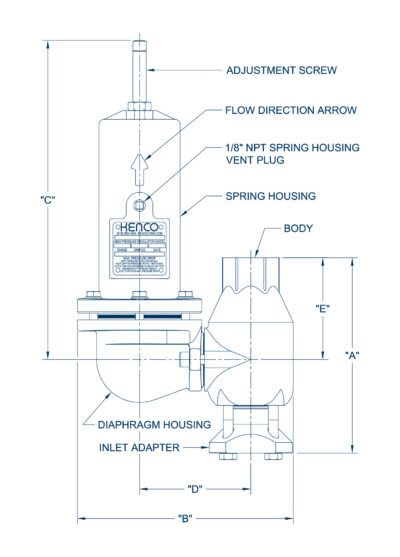
DIMENSIONAL INFORMATION
| Inlet / Outlet Size | “A” | “B” | “C” | “D” | “E” |
| 1″ NPT | 7.37″ | 8.14″ | 12.03″ | 4.19″ | 3.84″ |
| 2″ NPT | 7.88″ | 8.69″ | 12.03″ | 4.19″ | 4.08″ |
MAXIMUM INLET PRESSURES/PRESSURE DROPS (PSI)
| Orifice Size | Maximum Inlet Pressure* | ||||
*The Inlet Pressure can never exceed the sum of the set point and Maximum Pressure Drop. For example, a KPRH with a 3/8” orifice, Nitrile Orifice Seal,
and 90 PSI Outlet Pressure set point has a Maximum Inlet Pressure of 590 PSI.
ORIFICE SELECTION INSTRUCTIONS
Select the correct orifice size by comparing the wide open flow capacity at the application conditions to the flow rate needed for the application. Using
application conditions, calculate the flow rate (“Q”) through each orifice size using the Universal Gas Sizing (Equation 1) and Wide Open Flow Coefficients
below. Select the smallest orifice size that will meet the required flow rate needs. After selecting the orifice, make sure the application inlet pressure does
not exceed the pressure rating listed in the Maximum Inlet Pressures table above.
WIDE OPEN FLOW COEFFICIENTS
| Orifice Size | Cg | Cv | C1 |
|
1/8” |
12 | 0.5 |
24 |
|
3/16” |
56 | 1.82 |
30.8 |
|
1/4” |
76 |
2.56 |
29.7 |
|
3/8” |
169 |
5.95 |
28.4 |
|
1/2” |
277 |
8.7 |
31.8 |
Note: All flow coefficients were determined using lab tested data.
Important: The KPRH High Pressure Regulator must always be used with overpressure protection.
Use the Universal Gas Sizing Equation 1 to size for the appropriate relief valve.
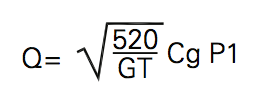
UNIVERSAL GAS SIZING EQUATION
Variables:
Q = Flow Rate (SCFH)
T = Gas Temperature @ Regulator Inlet (°Rankine) G = Gas Specific Gravity
P1 = Pressure @ Regulator Inlet (psia)
ΔP = Pressure Drop Across Regulator (psia)
Cg = Gas Sizing Coefficient
Cv = Liquid Sizing Coefficient
C1 = Flow Coefficient
Equation to determine Critical Flow:

Flow Rate Equation for Non-Critical Flow Applications:

Flow Rate Equation for Critical Flow Applications: